Mapping a Windows or webDAV drive using the WNSSOClient
Requirements: Functionality to map a Windows or webDAV drive using the wnssoclient has been added to LUW 6.3.0.199+ builds.
Use cases: users need access to network shares or LUW drives when connecting to a Windows application or desktops via webRDP.
In order to leverage the new functionality,
Screenshot examples:
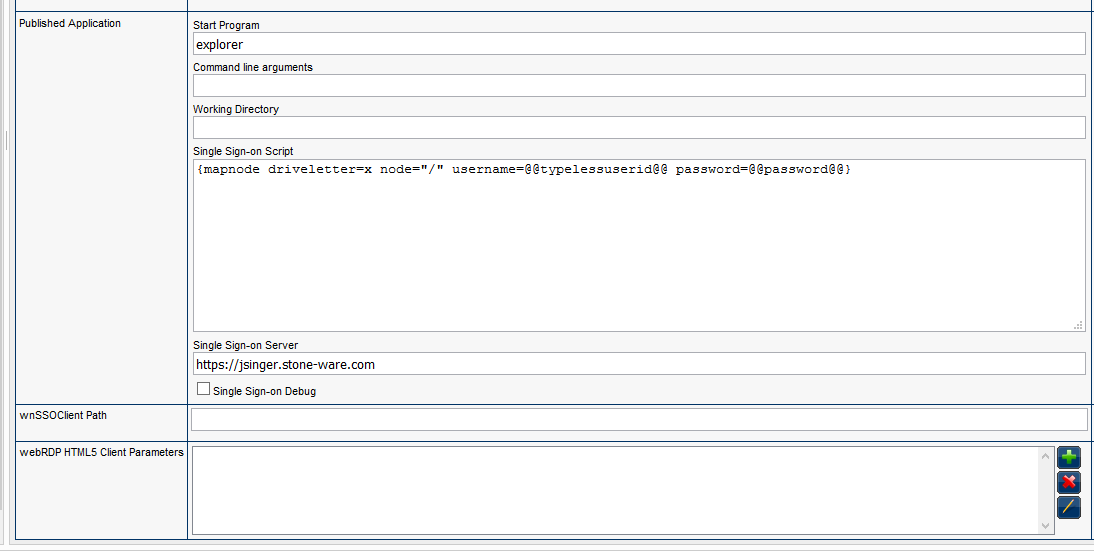
RDS application
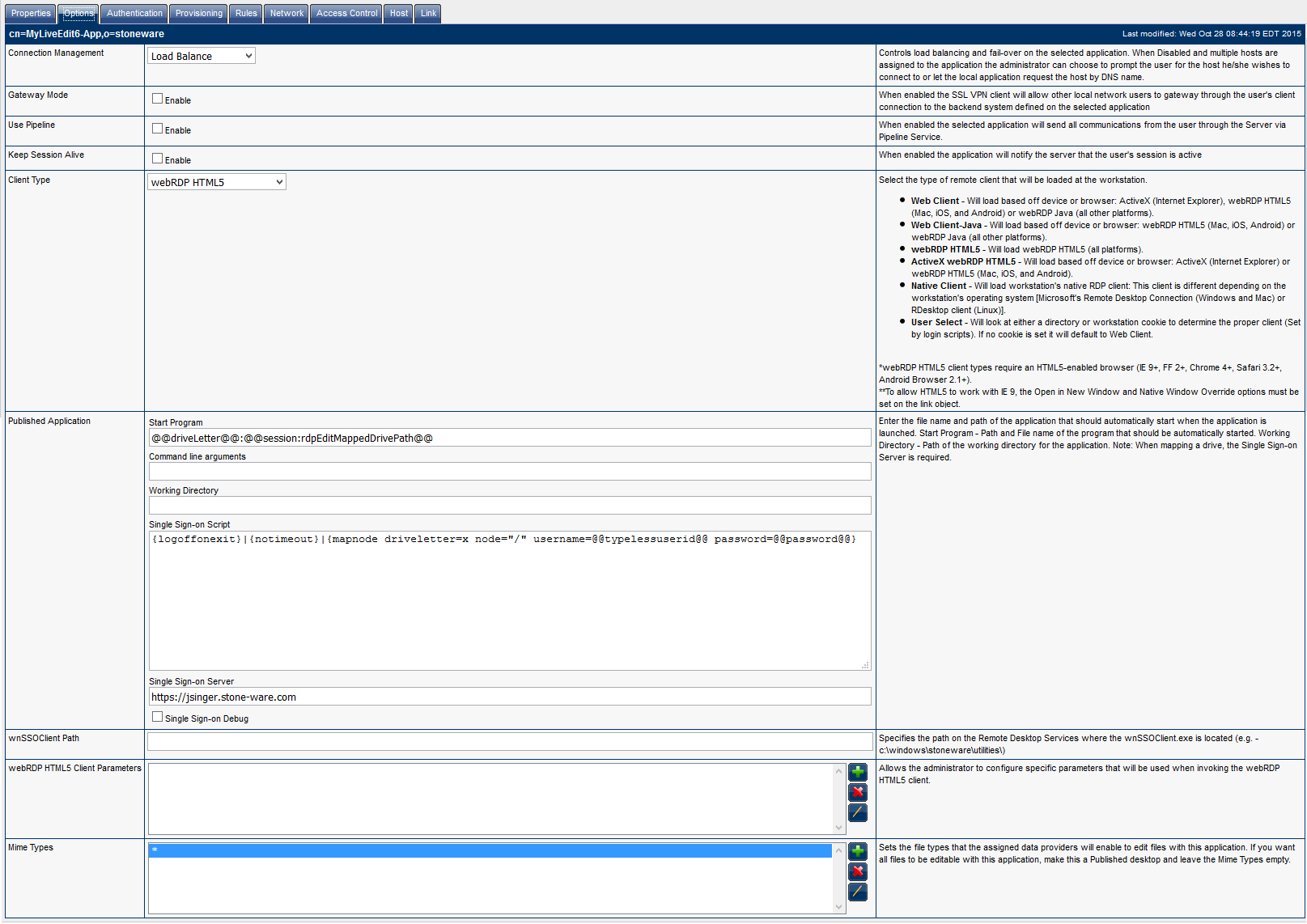
EditLive application
Use cases: users need access to network shares or LUW drives when connecting to a Windows application or desktops via webRDP.
In order to leverage the new functionality,
- The wnssoclient6.exe and associated DLL files need to be copied to a directory on an RDS server
- The wnssoclient6.exe must be published via RemoteApp Manager/Programs and configured to allow command line arguments
- In LUW an RDS application must be created and contain the following SSO script on the options tab in order to map a drive,
- Single Sign-on Script: {mapnode driveletter=x node=”/” username=@@typelessuserid@@ password=@@password}
Note: the node when doing a LiveEdit with a file will always be "/" but if we are simply mapping a drive, it can be more, like "/Share/Folder1/Folder2" or for a webDAV drive “/webDrive/Google Drive”. - For a LiveEdit application configure the options tab using the following values
- Start Program: @@driveLetter@@:@@session:rdpEditMappedDrivePath@@
- Single Sign-on Script: {logoffonexit}|{notimeout}|{mapnode driveletter=x node=”/” username=@@typelessuserid@@ password=@@password@@}
- Ensure the MIME Types are: * (just an asterisk)
- In either situation ensure your Single Sign-on Server is set to your server, for example:https://yourServer.example-cloud.com
- Ensure the following,
- The remote computer's IP/DNS address is in your config/allowHosts file.
- The firewall is off or not blocking the connection
- The wnSSOClient6.exe and swSSOLibrary.dll are in C:\Windows\System32 of the remote computer or that their location is specified in webAdmin on the "wnSSOClient Path" textbox
Note: The @@driveLetter@@ is parsed in the C# code, and the @@session:rdpEditMappedDrivePath@@ is parsed in SwIFTService.
Ex of @@driveLetter@@ is "x" (no quotes)
Ex of @@session:rdpEditMappedDrivePath@@ is "\MyShare\MyFile.txt" (no quotes)
Screenshot examples:
RDS application
EditLive application